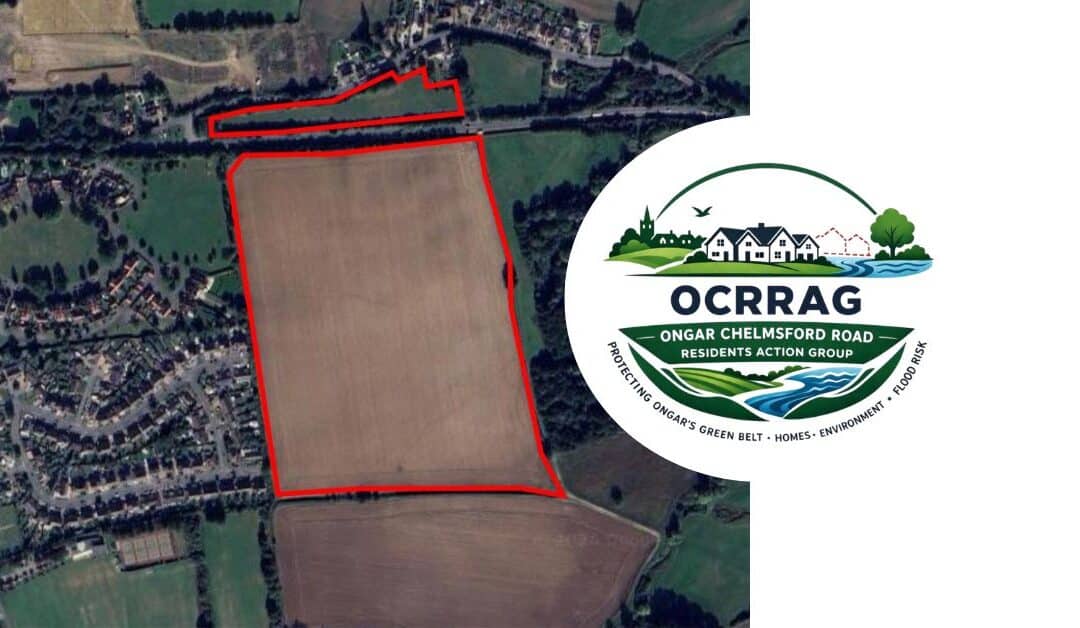
There’s growing concern in Ongar about a speculative proposal linked to Bloor Homes for land off Chelmsford Road. At the moment, the developer hasn’t purchased the land, and a planning application is expected by May. Separately, there’s a wider decision later this year that could affect how land is treated (often described locally as green belt being pushed towards “grey belt”), which could make development easier.
The key thing to know is this: we need to act on two tracks at the same time. One track is the planning application (the specific development proposal). The other is the policy track (the wider decisions that influence whether land is protected or becomes easier to build on). Both matter — and both rely on local people getting involved.
What’s happening (in plain English)
- Planning application expected: May
- Wider land/policy decision: expected towards the end of the year
- Location: Land off Chelmsford Road, Ongar
Even if the planning application feels like the “main event”, the policy decisions later in the year can set the tone for what happens next — not just on one field, but potentially across other open land too.
The 3 actions that make the biggest difference
1) Join the community updates
Join the Facebook group so you don’t miss deadlines, meeting dates, and templates:
If you can, turn on notifications — planning timelines can move quickly.
2) Submit an official objection (this is the most important)
When the planning application goes live in May, it’s crucial that people submit official objections through the council’s planning system. Social comments help awareness, but they don’t count in the same way as a formal objection.
A strong objection includes:
- Your name and postcode (to show you’re local)
- The planning reference number (once available)
- A clear opening line: “I object to this application”
- 3–6 bullet points with planning reasons (see below)
- A clear closing request: “Please refuse this application.”
3) Respond to the policy/consultation later this year
Later in the year, there may be consultations or decisions that affect how land is treated and protected. When that happens, it’s important to respond again — because policy decisions can influence what gets approved in future.
You can follow the council’s planning policy / Local Plan information here:
What to say (planning points that carry weight)
Councils pay most attention to objections that focus on planning reasons and evidence. Use the points that are true for you and your area.
Common, strong themes include:
- Countryside character and open land: harm to the character and setting of Ongar
- Traffic and road safety: increased congestion, unsafe junctions, pedestrian and cyclist safety
- Infrastructure capacity: pressure on GP/dentist access, school places, parking, and public transport
- Drainage and flood risk: increased surface water run-off, strain on drainage and sewer capacity
- Environmental impacts: wildlife habitats, hedgerows/trees, biodiversity loss, light and noise pollution
- Construction impacts: HGV routes, dust, noise, disruption and safety
- Precedent: if one site goes through, it can make it easier for more fields to be targeted next
Try to avoid:
- Personal attacks
- Long rants
- Copy/paste messages with no personal details (they can be treated as duplicates)
Quick evidence you can help collect (starting now)
You don’t need to be an expert to help build a strong case. Useful evidence includes:
- Photos/videos of traffic at peak times
- Photos after heavy rain showing standing water or run-off
- Notes of unsafe crossing points or near-misses
- Local experiences of GP/school capacity issues (wait times, difficulty registering)
- Wildlife sightings (date + location)
If you’re part of the Facebook group, share what you collect so it can be organised and used effectively.
What you can do today (5 minutes)
- Join the Facebook group: Ongar Chelmsford Road Residents Action Group.
- Ask 3 local people to commit now: “I will submit my objection when the May application goes live.”
- Start collecting evidence (traffic, flooding, safety, wildlife) so it’s ready.
- Keep an eye on council updates and consultation deadlines.
We will publish a follow-up post once the May planning reference number is live, with a direct link and a step-by-step “how to object” walkthrough.
Be sure to sign up to our mailing list so you don't miss anything.

Author: Kelly Stone
Owner of Site